Most people build a house exactly once. The learning curve is steep, the mistakes are expensive, and nearly all of the decisions that matter happen in the first three months — long before anyone lays a brick. What follows is roughly what we'd say to a friend who called on a Sunday and said: I've got a plot in Indore. What now?
Check the plot before anything else
A plot is not a blank slate. It has a soil profile, a water story, an access story and a legal story — and each can quietly rewrite your budget before you've drawn a line.
- Soil. Much of the Malwa plateau around Indore sits on black cotton soil — an expansive clay that swells through the monsoon and shrinks in the heat. Your plot may or may not: that's what a soil test is for. It tells your structural engineer what this plot needs, not what was done next door. Skipping it doesn't save money; it postpones the cost to a worse moment.
- Levels and access. Is the plot above or below road level, and where does rainwater go when it arrives all at once? Can a transit mixer and a truck of steel actually reach it? Level correction, drainage and double-handled material are invisible in a brochure and very visible in a bill.
- Water. Confirm what you'll have during the build and after it: municipal supply, a borewell, or tankers. Curing needs a lot of water for weeks on end, and "we'll manage" is an expensive sentence in May.
- Boundaries. Have the plot physically demarcated against the sanctioned layout before you design around it. A boundary that's off by a foot is trivial to fix on paper and brutal to fix in concrete.
Approvals and paperwork
Nothing should start on site until the paperwork is closed. Requirements vary with where your plot sits and they change over time, so confirm the current position with the local municipal body or development authority for your zone. Broadly, you want certainty on four things:
- Title and encumbrance. Clean ownership verified at the registry — not from the seller's folder.
- Land use. That the land is properly diverted to residential use and the layout or colony is an approved one.
- A sanctioned building plan. Your drawings, approved by the authority with jurisdiction over the plot, with setbacks, permissible coverage and height taken from the bylaws that apply to your plot and zone.
- Utilities. Water and electricity connections, and how supply will be handled during construction.
Two honest warnings. Bylaws are local and they move — take your setback and FSI numbers from your sanctioned plan and your architect, never from a neighbour or a blog post. And building beyond what's sanctioned is the fastest way to turn a home into an asset you can't sell or finance cleanly.
What drives cost per sq.ft
A per-square-foot rate is a useful shorthand and a poor contract. It's an average — and averages hide precisely the things that differ between two quotes.
A rate is only an opinion until it's attached to a specification. Read the inclusion list first. Read the number second.
What actually moves it:
- Structure. Floors, the span between columns, cantilevers, a stilt or basement, and whatever the soil report demands of the foundation. Two identical-looking elevations can differ meaningfully in steel and concrete.
- What's being measured. Rates are usually applied to built-up area, which includes walls, staircase and often balconies and terraces at some proportion. If a quote doesn't state what it measures, it isn't comparable to anything.
- Finish level. Flooring, joinery, sanitaryware, electrical range and elevation detail. This is where most of the visible difference between packages lives.
- Site conditions. Access, level correction, soil, dewatering, and how far material has to travel.
- Market rates. Steel and cement move. Sand supply in Madhya Pradesh is seasonal and regulated — ask where the sand is coming from and whether the source is a legitimate one. Manufactured sand (M-sand) is a common alternative: more consistent, not inferior.
For reference, our own packages are quoted from ₹1,500/sq.ft (Ananta Essential), ₹1,600/sq.ft (Ananta Signature) and ₹1,700/sq.ft (Ananta Prestige). You can compare what changes between them on the packages page, or get a rough number from the cost calculator.
Starting prices are indicative. Final cost depends on plot condition, design, built-up area, number of floors, structural requirements, material selections and site conditions. Exact pricing is shared after a site assessment and confirmed in your contract.
Labour-plus-material vs turnkey
Two common ways to get a house built, asking very different things of you.
- Labour contract, material bought by you. The contractor supplies labour against a rate; you buy every bag, rod and tile. You control quality and price at the finest grain — and you become the project manager, absorbing every delay caused by something that didn't arrive. It can genuinely cost less if you have the time and the temperament.
- Turnkey. One contract covers material, labour, coordination and handover against an agreed specification. You trade granular control for a single point of accountability and a predictable number. The model rests entirely on that specification: if it's vague, turnkey just means somebody else picks your materials.
Neither is nobler. Choose on how many hours of your own life you'll spend on site — and if you go turnkey, put your energy into the spec sheet rather than into haggling the rate.
The construction stages at a glance
Broadly, in order:
- Site setup, marking and excavation
- Foundation and footings, per the soil report and structural design
- Plinth and backfilling
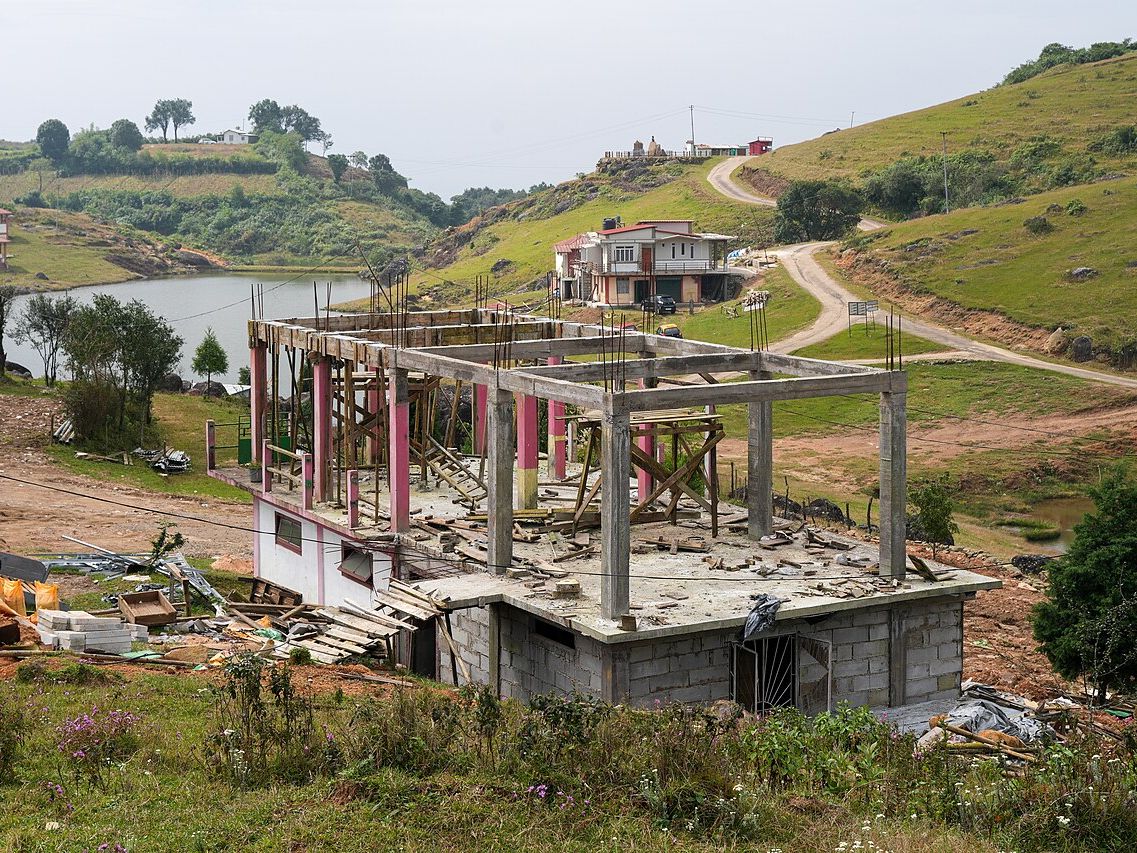
- RCC frame — columns, beams and slabs, floor by floor
- Brick masonry and openings
- Concealed electrical and plumbing
- Internal and external plaster
- Waterproofing — terrace, bathrooms, sunken slabs
- Flooring, doors and windows
- Painting, fittings and fixtures
- Snagging and handover
Two of those deserve more attention than they get. Curing — the thankless watering of fresh concrete — does more for the life of your structure than almost any material upgrade you can buy. And waterproofing is cheap now and miserable later; in a climate with a real monsoon, it is not the place to economise.
Mistakes that cost the most
- Designing before the soil test and the sanctioned plan. You'll only redraw.
- Starting the foundation with the monsoon a few weeks away and no plan for water on site — then paying for a delay you scheduled yourself.
- Comparing quotes on the rate alone. The lowest number usually has the shortest inclusion list.
- Changing the layout after the RCC is cast. A wall moved on paper costs a coffee. Moved after casting, it costs a fortune.
- No written specification. If the grade, size and count aren't on paper, they're a matter of memory — and memory is not a contract.
- Budgeting to exactly 100%. Keep a real contingency. Something will surprise you.
- Buying the elevation and forgetting the roof. Nobody photographs waterproofing. Everybody remembers a leak.
Questions to ask any builder
Take these to every conversation — including ours:
- What exactly is included, and what is excluded, in writing?
- What area are you measuring, and how is it arrived at?
- What grade of concrete and steel — and is that decided by the structural design, or by the budget?
- Who is my single point of contact, and how will I hear about progress?
- If I change my mind mid-project, how is the cost revised, and when do I see it?
- What is the payment schedule, and is it tied to stages I can actually see?
- What will I end up paying somebody else for?
You're not being difficult. You're doing the one thing that separates a good build from an expensive story — agreeing the details while everyone is still friendly. And if you're at the "what now" stage with a plot in Indore, that's exactly the conversation we're built for.